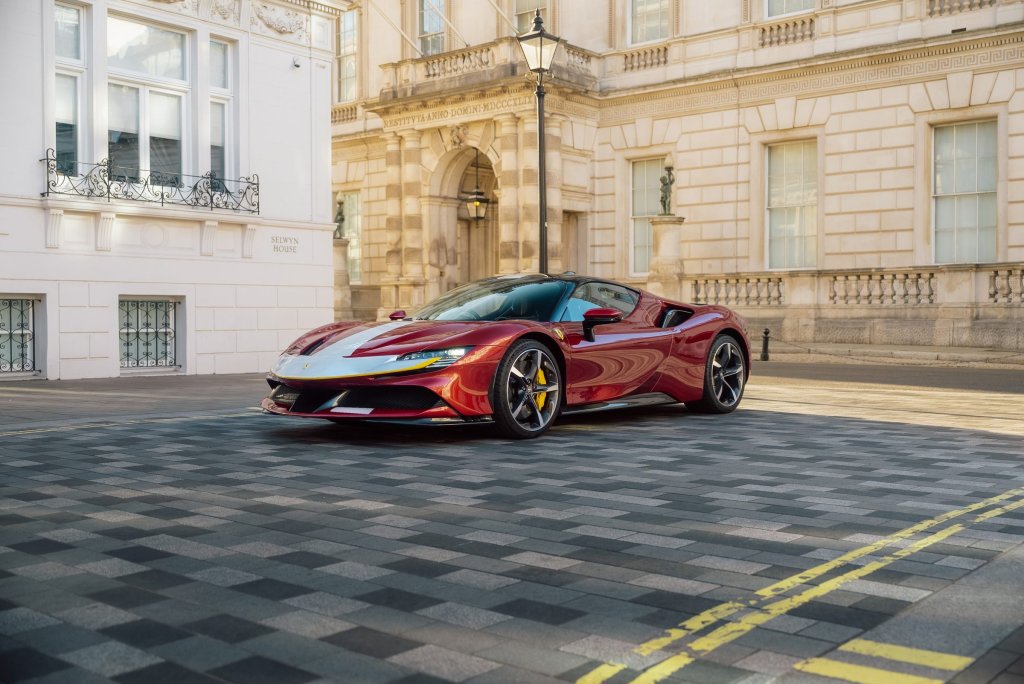
The UK market for limited edition and numbered supercars is experiencing what elite brokers call “The Great Shift”. In 2026, the era of buying any low-volume supercar and expecting automatic financial appreciation is over. Value must be deeply earned, creating a stark divide between two types of limited-run vehicles: the true halo, numbered investment tier, and artificial, marketing-led special editions.
1. The numbered “halo” tier: pure analogue rarity
At the absolute peak of the British market, collectors are hunting for historically significant, numbered units that represent the end of an engineering era.
- The analogue premium: the UK market is aggressively favouring naturally aspirated internal combustion engines (ICE) and manual gearboxes. Prime examples are the Ferrari F12tdf (limited to 799 units) and the Porsche 911 GT3 RS 4.0 (997, 600 units). In the UK these cars command healthy seven-figure or near-seven-figure valuations, because they represent engineering boundaries that manufacturers can no longer recreate under emissions regulations.
- The right-hand-drive (RHD) multiplier: because the UK is one of the very few right-hand-drive supercar markets, limited runs that are factory-built in RHD command significant local premiums. Of the global allocation of extreme hypercars like the Pagani Huayra Roadster or Ferrari LaFerrari Aperta, only a handful (such as an estimated 16 UK-supplied Apertas) are factory RHD. When these cars trade quietly off-market in London or the Cotswolds, they command figures well above their left-hand-drive European equivalents.
2. The “artificial exclusivity” trait: the softening middle
Conversely, the UK market has grown heavily resistant to what it considers “decal engineering”: modern supercars where a manufacturer builds 1,000 to 1,500 units of a “special edition” that features only minor aesthetic changes, carbon-fibre add-ons or unique software tuning.
- Inventory backlogs: across specialist supercar dealerships in the UK, modern limited series (like certain hybrid track specials) are no longer commanding the excessive over-list premiums seen a few years ago. High interest rates on dealer floorplans have forced corrections on newer, tech-heavy limited cars, moving them from speculative assets back to standard depreciation curves.
- The Porsche strategy pivot: this shift is so pronounced that luxury stalwarts like Porsche have recently adjusted their global and UK strategies (with the “Sportwagenschmiede ’35” roadmap) to prioritise highly custom, ultra-low-volume personalisation and heritage-numbered vehicles over high-volume premium variants.
3. UK-specific investment dynamics
| Market driver | UK impact and mechanism |
|---|---|
| SORN as an investment strategy | Approximately 33% of UK supercars sit on SORN (Statutory Off Road Notification). Collectors of rare numbered models (especially Ferrari, Lotus and McLaren) keep them in climate-controlled storage to hold delivery mileage strictly under 2,000 miles and maximise auction hammer value. |
| The “tax” insulation | While the UK imposes luxury car tax supplements on standard premium vehicles, true numbered supercars and hypercars bypass standard consumer market patterns because they are bought outright as hard-asset alternatives to equities or fine art. |
| The British heritage factor | Homegrown limited editions, such as the manual-gearbox Aston Martin Valour or the track-focused McLaren Ultimate Series, enjoy deep structural loyalty within the domestic British collector market. |